
The Ultimate West Sumba Route for a Bespoke Adventure
- Personalized itineraries tailored to individual interests, from anthropology to surfing.
- Access to private ceremonies, master artisans, and remote villages.
- Seamless logistics managed by on-the-ground experts, ensuring comfort and safety.
The air hangs heavy with the scent of sandalwood and clove, a fragrant counterpoint to the rhythmic clatter of an ikat loom. A procession of women, balancing offerings on their heads, walks silently past towering megalithic tombs that have stood for centuries. This isn’t a curated performance; it’s the unscripted rhythm of daily life in West Sumba. To truly experience this island, to move beyond the postcard view and into its complex, living heart, requires more than a booking confirmation. It demands a narrative, a path crafted with intention. This is the framework for the ultimate West Sumba route, an itinerary designed not just for travel, but for deep, meaningful engagement.
Charting Your Course: Arrival and Acclimatization in Waikabubak
Your journey begins not on the sand, but in the sky, during the 90-minute flight from Bali’s Ngurah Rai Airport (DPS) to Tambolaka Airport (TMC) in Sumba’s northwest. From the moment you land, the logistical precision of a well-planned expedition becomes paramount. The 42-kilometer drive inland towards Waikabubak, the regional capital, is a crucial transition. This is where the value of a dedicated ground team, like the one we rely on at sumba concierge, reveals itself. A comfortable, air-conditioned 4×4, a driver who knows every pothole, and a guide who is less a tour leader and more a cultural interpreter are non-negotiable. As you ascend into the highlands, the landscape shifts from arid coastline to rolling, verdant hills. This initial drive is your orientation. Your guide, perhaps someone as knowledgeable as our local expert Pak Yulianus, will begin to unravel the island’s foundational belief system: Marapu. He’ll point out the first of the megalithic tombs, stone slabs weighing several tons, dragged here by hundreds of men in ceremonies of immense social and spiritual importance. This isn’t just history; it’s a living practice. Understanding this animist faith, which venerates ancestors and the delicate balance between the spirit and human worlds, is the key to unlocking everything you will see. For a deeper understanding of the island’s core tenets before you even arrive, our The Definitive Sumba Concierge Guide provides essential context.
Marapu Culture: The Villages of Tarung and Waitabar
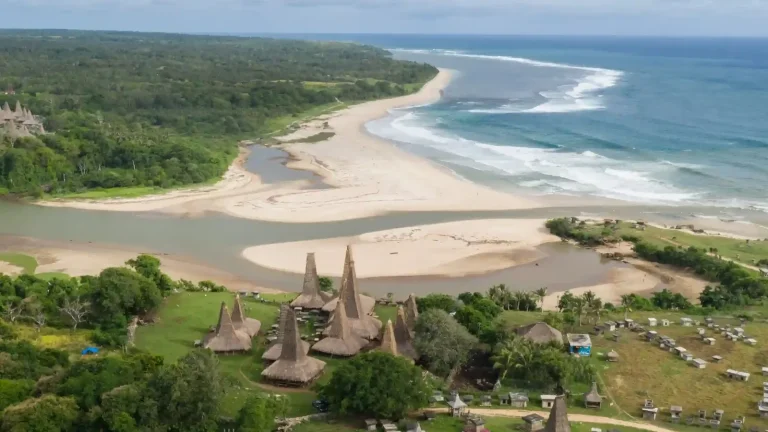
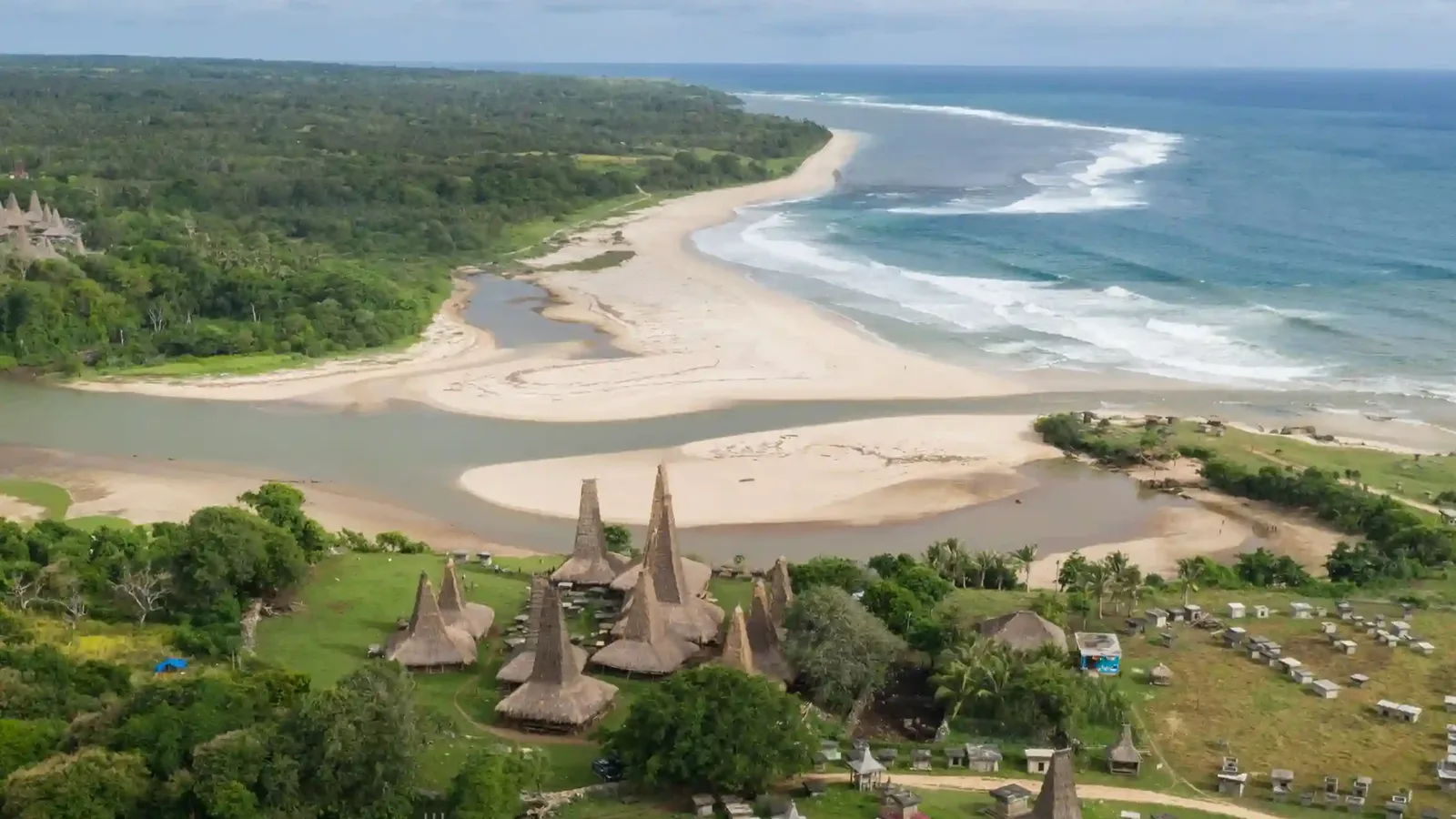
Just a stone’s throw from the relative bustle of Waikabubak lie the twin villages of Tarung and Waitabar, an accessible yet profoundly authentic window into Marapu life. A bespoke visit here is not a simple walk-through. It’s an arranged audience. Your guide will have made prior contact, ensuring your arrival is expected and welcomed. The first protocol is the presentation of sirih pinang (betel nut), a gesture of respect that opens the door to genuine interaction. The village itself is a living cosmogram. The iconic uma mbatangu, the high-peaked clan houses, are built on a three-tiered principle: the underfloor space for livestock represents the lower world, the main living area is the world of humans, and the soaring, thatched roof, reaching up to 25 meters, is the realm of the gods and ancestors. Inside, the air is cool and dark, the central hearth a focal point for family life. After a devastating fire in 2017 destroyed 27 traditional homes, the community has been meticulously rebuilding, their resilience. Observing this process, you understand that this culture is not a relic. It is dynamic and persistent. A proper visit, facilitated by an expert, allows for conversation with a village elder or even a Rato (Marapu priest), who can explain the significance of the carved buffalo horns and pig jawbones that adorn the home’s interior—trophies from past ritual sacrifices. This intricate belief system is detailed further on Wikipedia’s excellent primer on the Marapu religion.
The Art of Ikat: A Private Audience with a Master Weaver
Sumba’s ikat textiles are globally renowned, but to truly appreciate their significance, one must witness their creation firsthand. This is far removed from a typical souvenir stop. A bespoke sumba adventure involves arranging an intimate session within a local weaving cooperative, away from the main tourist trail. Here, in the shaded courtyard of a weaver’s home, you will meet an Ibu (a respected elder woman) who has dedicated her life to this ancestral art. She will demonstrate the painstaking process, which can take over a year to yield a single large cloth. It begins with hand-spinning local cotton, followed by the tying of fibers with dried palm leaves to resist dye. The palette is derived entirely from nature: deep indigo blues from the Indigofera tinctoria plant, rich reds from the root of the morinda tree. Each dip in the dye bath—a process that can be repeated more than 20 times—deepens the color. The motifs are a visual language, telling stories of wealth, power, and mythology: horses for nobility, crocodiles for royalty, and the ever-present skull tree (andung), a relic from the island’s headhunting past. To hold a piece of this textile is to hold a story. The finest examples can command prices exceeding $5,000 USD, a figure that becomes entirely reasonable when you comprehend the labor and artistry involved. Understanding the value of such cultural artifacts is key, a topic we explore in our Sumba Concierge Pricing & Cost Guide.
Coastal Grandeur: The Unspoiled Terrains of the Southwest
After immersing yourself in the cultural heartland, the itinerary pivots towards the dramatic coastline of the Kodi district. This is where Sumba’s wild, untamed beauty is on full display. But again, access and timing are everything. A standard tour might arrive at Weekuri Lagoon midday, alongside dozens of other visitors. A curated experience ensures you arrive in the golden light of the late afternoon, with a private picnic of fresh grilled fish and cold Bintang beer waiting. Weekuri itself is a geological marvel, a saltwater lagoon separated from the ocean by a narrow, porous ridge of rock. At high tide, ocean water surges through, creating a crystal-clear swimming hole with a unique meromictic quality—its distinct layers of salt and fresh water create visible temperature and density gradients. Just two kilometers away lies Mandorak Beach, a perfect crescent of white sand flanked by two dramatic rock promontories that form a natural gateway to the sea. The experience is elevated from a simple beach visit to an exclusive event. It’s about having the space and silence to absorb the sheer power of the landscape, watching the sun dip below the Indian Ocean from a vantage point secured just for you. This is the essence of modern luxury travel, as promoted by platforms like Indonesia’s official tourism board, but executed with an insider’s precision.
The Pasola Legacy: Rituals Beyond the Main Event
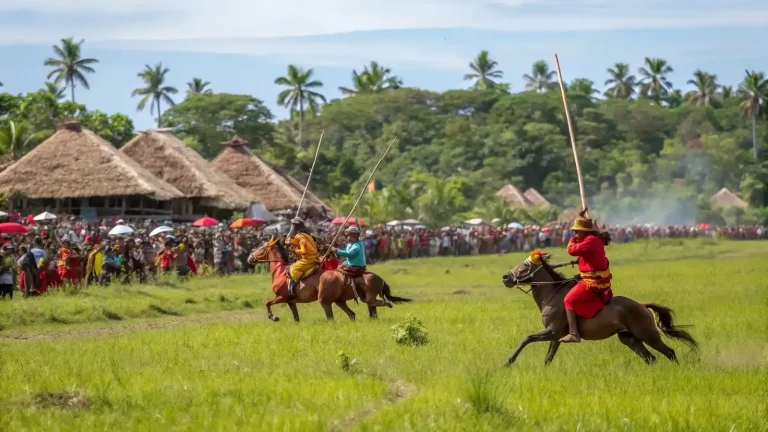
No discussion of West Sumba is complete without mentioning the Pasola, the famous and often violent ritual battle fought on horseback. While the main events in the Wanokaka and Lamboya districts, held annually in February and March, are a spectacular draw, a bespoke sumba adventure offers a more nuanced engagement with this tradition. The festival’s date is not fixed; it is determined by the local Rato upon the arrival of the nyale, a multicolored sea worm, to the shore. A truly connected guide can secure access not to the chaotic main event, but to the smaller, more intimate rituals that precede it. This could mean a visit to the stables to see the iconic Sumba horses—small, agile, and revered—being prepared by their riders. It might involve a quiet conversation with a village elder about the philosophical underpinnings of the festival: a ritual of controlled conflict meant to “spill blood on the soil” to ensure a bountiful harvest. The Pasola is a core element of Sumba’s cultural identity, so much so that it has been considered for inclusion on UNESCO’s list of Intangible Cultural Heritage. Instead of just being a spectator in a crowd of thousands, you become an informed observer, understanding the deep spiritual and agricultural significance of the ceremony. This level of insight transforms the experience from a spectacle into a profound cultural lesson, something we detail in The Definitive Sumba Concierge Guide.
Quick FAQ for the Discerning Traveler
What is the best time of year for this West Sumba route?
The dry season, from May through October, offers the most reliable weather and accessibility for exploring remote roads. However, the shoulder months of April and November can be rewarding, with fewer visitors and lush, green landscapes. The Pasola festival season in February and March is a unique, albeit crowded, time to visit.
How should I handle local customs and payments?
Your guide is your cultural bridge. They will manage all necessary offerings for village visits, such as the customary gift of betel nut. While high-end hotels accept cards, cash (Indonesian Rupiah) is essential for everything else. ATMs are unreliable outside of Waikabubak, so it is wise to carry a sufficient amount, a detail your trip planner can help calculate. We break down potential on-the-ground costs in our Sumba Concierge Pricing & Cost Guide.
What level of accommodation can I expect in West Sumba?
West Sumba offers a spectrum of lodging. On one end are world-class luxury resorts that consistently rank among the best on the planet. On the other are authentic, community-run homestays that offer deep immersion. A well-designed bespoke itinerary often blends these, allowing for both exceptional comfort and genuine local connection.
Is West Sumba safe for luxury travel?
Absolutely, provided you are traveling with a reputable and experienced operator. The primary challenges in Sumba are logistical, not security-related. A top-tier provider mitigates all potential issues, from road conditions to cultural misunderstandings, ensuring a seamless and secure journey from start to finish.
This route is more than a series of destinations; it is a curated narrative woven from threads of ancient belief, masterful artistry, and raw, powerful nature. It is an exploration of an island that has fiercely guarded its identity. Crafting such a journey requires more than online research; it requires deep, on-the-ground knowledge and a network of trusted local relationships. To move from being a tourist to a privileged guest, you need a partner who understands the island’s subtle language. Begin crafting your own bespoke sumba adventure with the experts at sumba concierge and get the island’s most profound secrets.
Keep Reading
Family Travel
Komodo Liveaboard Planning for Families and Groups (2027 Guide)
Planning a Komodo liveaboard for your family or group in 2027 requires careful consideration of budgets, privacy, and activities. Open…

Family Travel
Family‑friendly Sumba: kids, teens and multigenerational trips
Family-friendly Sumba: Kids, Teens, and Multigenerational Trips Sumba is an enchanting destination in Indonesia that proves to be an excellent…
Family Travel
Authentic Sumba culture, villages and local ceremonies
Understanding Authentic Sumba Culture Sumba is an island that offers a rich of tradition, spirituality, and artistry. The indigenous people,…