
Is Sumba Safe? A Guide from a Local Travel Specialist
- Violent crime targeting tourists is exceptionally rare.
- The primary safety challenge is navigating cultural protocols respectfully.
- Health and infrastructure require careful, expert-led planning.
- Engaging a specialist mitigates nearly all potential risks.
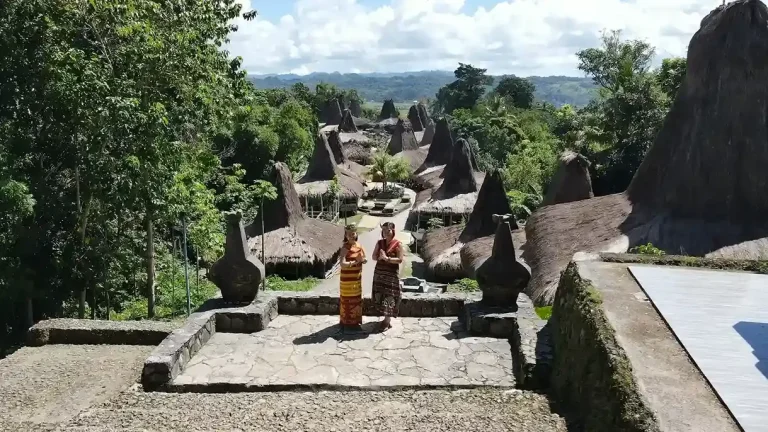
The air hangs heavy and warm, thick with the scent of dried grass and the distant, smoky perfume of sandalwood. From an open-air Land Rover, the landscape unspools—a vast, undulating savannah of limestone hills punctuated by the stark, soaring roofs of traditional villages. This is the immediate, sensory immersion of Sumba. It’s an island that feels primordial, a place where time is measured not by clocks but by the harvest and the intricate cycles of Marapu ritual. It is this very rawness, this departure from the familiar, that often prompts the first question from our clients: “Is it safe?” As a travel editor who has spent years traversing this enigmatic island, and in conversation with our lead local Sumba travel specialist, Rambu Kaita, I can tell you the answer is a nuanced, and resounding, yes. The concept of safety here is simply different. It’s less about locking doors and more about opening the right ones, with the right guide. That is the core philosophy of what we do at Sumba Concierge.
Deconstructing the “Wild West” Mythos of Sumba
Sumba has long been saddled with a reputation as Indonesia’s “Wild West,” an image fueled by its history of inter-clan warfare, its famous Pasola festival—a ritualized battle between spear-wielding horsemen—and its relative isolation until the early 21st century. While this history is authentic, applying its legacy to modern travel safety is a profound misinterpretation. “The stories of warriors are a source of pride, not a threat to visitors,” explains Rambu Kaita, our on-the-ground expert who was born in the West Sumba village of Lamboya. “Our social fabric is held together by adat, the customary law. It governs every interaction and places a high value on hospitality. An attack on a guest would bring immense shame and spiritual imbalance to a village.” This system of belief, known as Marapu, is an animist faith that predates the arrival of major world religions and continues to be the dominant cultural force. As detailed in historical records, including Sumba’s Wikipedia entry, Marapu dictates a complex web of social obligations, ancestor worship, and ritual sacrifices that maintain harmony between the human and spirit worlds. For a traveler, this means you are entering a society with an deeply ingrained, internally enforced code of conduct. The island, spanning over 11,000 square kilometers with a population of around 800,000, operates on these ancient principles. The safety you feel here is not from a visible police presence, but from the invisible, yet powerful, influence of a culture that prioritizes communal stability above all else.
Navigating Local Culture and Customs with Respect
The most significant aspect of staying safe in Sumba is cultural fluency. This is where a local Sumba travel specialist transitions from a convenience to a necessity. Arriving unannounced at a traditional village is not just poor etiquette; it can be perceived as a serious transgression. These are not tourist exhibits but living communities, often with active megalithic burial sites that are central to their spiritual life. “You cannot simply walk in with a camera,” Rambu insists. “There is a protocol. We bring gifts—typically betel nut—and present them to the Rato, or village elder. We explain our purpose. This is how you are welcomed, not as a tourist, but as a guest.” This formal process of introduction is critical. Without it, you are an outsider. With it, you are under the village’s protection. This extends to every aspect of your visit, from asking permission to photograph to understanding where you can and cannot walk. Many of Sumba’s most important cultural sites, some of which are being considered for UNESCO World Heritage status, are on ancestral land. Access is a privilege granted through relationships, not a right granted by a ticket. Our role is to facilitate these introductions seamlessly, ensuring your presence is respectful and welcomed. For a deeper understanding of how we structure these immersive cultural experiences, we’ve compiled The Definitive Sumba Concierge Guide, which outlines the delicate balance of access and respect.
Health and Wellness: What to Know Before You Go
Practical health considerations are paramount for any remote destination, and Sumba is no exception. While the five-star resorts maintain impeccable standards of hygiene and vector control, independent travel requires more diligence. Malaria is a primary concern for many visitors. The risk is very low in the popular coastal areas of Southwest Sumba where most luxury properties are located. However, the risk increases in the more humid, densely populated eastern part of the island and remote inland regions. Prophylaxis should be discussed with your doctor based on your specific itinerary. Dengue fever, transmitted by daytime mosquitoes, is a more prevalent risk across Indonesia, and using a quality DEET-based repellent is non-negotiable. Tap water is not potable anywhere on the island; stick to bottled or properly filtered water at all times. Medical infrastructure has improved significantly over the past decade. The opening of RSUD Tambolaka, a modern regional hospital just 15 minutes from Tambolaka Airport (TMC), provides a reliable option for emergencies. However, for serious medical issues, evacuation to Bali is still the standard procedure. We ensure all our drivers are equipped with first-aid kits and have direct communication with medical staff. The sun is another powerful, often underestimated, factor. The UV index is consistently extreme, and dehydration is a real risk. A wide-brimmed hat, high-SPF sunscreen, and consuming at least 3-4 liters of water per day are essential for staying healthy and enjoying your exploration of the island’s magnificent coastline and interior.
Infrastructure and Transportation: Getting Around Safely
Sumba’s infrastructure is a work in progress. While a main sealed road connects the western capital of Waitabula (near Tambolaka airport) to the eastern capital of Waingapu—a 130-kilometer journey that takes about 3 to 4 hours—many of the roads leading to iconic villages, waterfalls, and beaches are unpaved, bumpy, and challenging to navigate. Self-driving is not a viable or safe option for visitors. Local transportation, like shared bemos, is unreliable and not suited for a structured itinerary. The only practical and safe way to explore the island is with a private vehicle and an experienced local driver. This is a critical component of any well-planned Sumba journey. Our drivers are not just chauffeurs; they are Sumbanese men who have been navigating these roads their entire lives. They understand the conditions, know which riverbeds are passable after a rain, and have the mechanical skills to handle a flat tire 50 kilometers from the nearest town. They are also your first line of cultural translation. The quality of the vehicle is equally important. We use a fleet of well-maintained 4x4s, essential for accessing remote areas. The cost of this security and convenience is a key factor in any trip budget. To help clients plan, we’ve created a detailed breakdown in our Sumba Concierge Pricing & Cost Guide, which explains why investing in quality transport is the single most important safety decision you will make. Daily flights from Bali (DPS) to Tambolaka (TMC) on Garuda Indonesia and Wings Air are reliable, taking approximately 90 minutes.
The Role of a Local Sumba Travel Specialist in a Seamless Journey
The preceding points all converge on a single, vital conclusion: the key to a safe and profound experience in Sumba is the expertise of a dedicated specialist. This is not a destination for casual, do-it-yourself travel. The logistical and cultural complexities are too great. A local Sumba travel specialist, like our Rambu, does more than book hotels and cars. They are your cultural bridge, your logistical guarantor, and your safety net. They have personal relationships with village elders, built over years of trust. They know which routes are safe, which beaches are accessible on a given day, and how to read the subtle social cues that are invisible to an outsider. When you want to visit a remote ikat-weaving village, they don’t just drive you there; they call ahead to ensure the master weaver is present and that your visit is welcome. If a road is washed out, they have an alternative plan already in motion. This level of on-the-ground, real-time problem-solving is what separates a frustrating trip from a transformative one. It’s about converting potential risks into curated, meaningful experiences. Our entire operational model is built on this principle. We handle the complexities—from flight coordination to negotiating village entry protocols—so you can immerse yourself in the magic of the island without worrying about the “what ifs.” This approach is detailed further in our comprehensive guide to Sumba travel, which illustrates how an expert-led itinerary is constructed.
A Note on Pasola and Ritual Events
The Pasola festival, held annually in February and March, is perhaps Sumba’s most famous cultural spectacle. It is a thrilling, chaotic, and deeply serious ritual—a mock battle on horseback where men hurl wooden spears at one another. The belief is that spilled blood fertilizes the land, ensuring a bountiful harvest. For an outsider, witnessing Pasola can be an intense experience, and safety is a legitimate concern. The crowds are massive, the energy is frenetic, and the event itself is inherently violent, albeit ritually controlled. Attending Pasola without expert guidance is strongly discouraged. A specialist provides several layers of security. First, logistics: getting to the correct Pasola field (the location changes based on the full moon and the arrival of sea worms) is a challenge in itself amidst island-wide traffic. Second, positioning: your guide will know the safest places to stand, often with a specific family or clan, away from the most chaotic parts of the crowd and the direct line of fire. Third, context: understanding what you are seeing—the roles of the Rato, the significance of the first blood, the meaning of the chants—transforms the spectacle from a violent melee into a profound cultural ceremony. The same principle applies to other large-scale rituals, such as the elaborate funeral ceremonies that can involve the sacrifice of dozens of buffalo. Navigating these powerful events requires the kind of insider access and cultural sensitivity that only a sumba concierge can provide.
Quick FAQ on Sumba Safety
Is solo female travel safe in Sumba?
Yes, with the right structure. A solo female traveler working with a specialist and a trusted private driver will find Sumba to be very safe and respectful. The culture is generally conservative, and you will be treated with courtesy. Independent backpacking as a solo female is not recommended due to logistical challenges, not specific threats.
What are the crime rates like?
Crime against tourists is almost non-existent. The primary issues on the island are land disputes and inter-familial conflicts, which very rarely involve outsiders. Petty theft can occur in market towns like Waingapu, but it is not common. Standard precautions, like not flashing large amounts of cash, are sufficient. The cost of a safe journey, as outlined in our pricing and cost guide, effectively eliminates these minor risks.
Are there dangerous animals to worry about?
Sumba has no large predators. The main concerns are snakes, including several venomous species, and crocodiles in some rivers and estuaries. However, encounters are rare. When hiking or walking through tall grass, it is wise to be cautious. Your guide will be acutely aware of any local risks and will steer you clear of potentially hazardous areas. The most dangerous animal for most visitors will be the mosquito.
Is it safe to swim at the beaches?
Many of Sumba’s beaches are pristine for swimming, but not all. Some have powerful currents and undertows, particularly during certain tides. There are no lifeguards. Rely on local knowledge. Your guide or hotel staff will know which beaches are safe for swimming and which are best for just admiring the view. Nihi Sumba’s famous surf break, “Occy’s Left,” for example, is for expert surfers only.
The question of safety in Sumba is not a simple yes or no. It is a conversation about preparation, respect, and expertise. The island is not dangerous, but it is demanding. It asks for more from a traveler than Bali or Lombok. It requires a willingness to engage with a culture on its own terms and an understanding that the smoothest path is one cleared by local knowledge. By partnering with a true local Sumba travel specialist, you are not just buying a vacation; you are investing in a safe, seamless, and deeply authentic journey into one of the last truly magnetic cultures of our time. Let the team at Sumba Concierge handle the details, so you can focus on the discovery.
Keep Reading
Cultural Insights
The 2027 Early-Booking Guide to Bali and Komodo: Lock In the Best Dates
Planning your 2027 trip to Bali and Komodo? Securing your dates early is key, especially with new visitor caps in…
Cultural Insights
Food, cafes and nightlife: where to eat and drink in Sumba
Food, Cafes, and Nightlife: Where to Eat and Drink in Sumba Sumba, an enchanting island in Indonesia, offers a rich…
Cultural Insights
Permits, entry fees, etiquette and local rules in Sumba
Understanding Sumba: Your Guide to Permits, Fees, and Local Etiquette Sumba, an enchanting island in Indonesia, is known for its…